
🦴 Hip Replacement After an Auto Accident: What You Need to Know
Car accidents can be chaotic and traumatic events that leave lasting pain — not just emotionally but physically. Among the many injuries caused by motor vehicle collisions, hip injuries are common and can sometimes lead to the need for a hip replacement. In this guide, we’ll explore how a car accident can damage the hip, when replacement surgery may be necessary, what the procedure involves, and what recovery looks like.
🚗 Why Hip Injuries Occur in Auto Accidents
The hips are strong joints, but the forces in even moderate to severe collisions can overwhelm their natural resilience. Typical mechanisms of injury include:
• Dashboard impact: In frontal crashes, the knee can slam into the dashboard, transferring force up the thigh bone (femur) into the hip socket. This impact can fracture the socket or neck of the femur.
• Side collisions and rollovers: These can twist or compress the hip joint, leading to dislocations or soft-tissue tears around the hip.
• Misalignment and strain: Even without a clear fracture, the sudden jolt of an accident can misalign the hip joint and strain muscles, ligaments, or tendons.
In some cases, hip injuries aren’t immediately obvious — pain might start hours or days later once swelling develops or as movement aggravates the joint. That’s why thorough evaluation after a collision is essential.
🩹 Common Hip Injuries After a Crash
Hip injuries after accidents span a spectrum from mild to severe:
- Strains and contusions — damage to muscles or soft tissues around the hip.
- Hip fractures — breaks in the femoral neck or the pelvic socket.
- Hip dislocations — when the ball of the joint is forced out of the socket.
- Cartilage tears — injuries to the labrum (lining of the hip socket) that can cause pain and instability.
Fractures and dislocations are the most serious injuries and can lead to post-traumatic arthritis — a form of arthritis that accelerates joint damage long after the accident. When joint surfaces become worn and painful, a hip replacement may be recommended.
🧠 When Is Hip Replacement Considered?Not every hip injury requires a full replacement. Many patients recover with conservative treatments such as rest, physical therapy, anti-inflammatory medications, and injections.
However, hip replacement surgery becomes a consideration when:
- Pain persists despite non-surgical care.
- Mobility is limited, affecting daily activities like walking, climbing stairs, or getting out of a chair.
- Joint damage is extensive, such as a fracture that can’t heal well on its own, or when cartilage deterioration causes chronic pain.
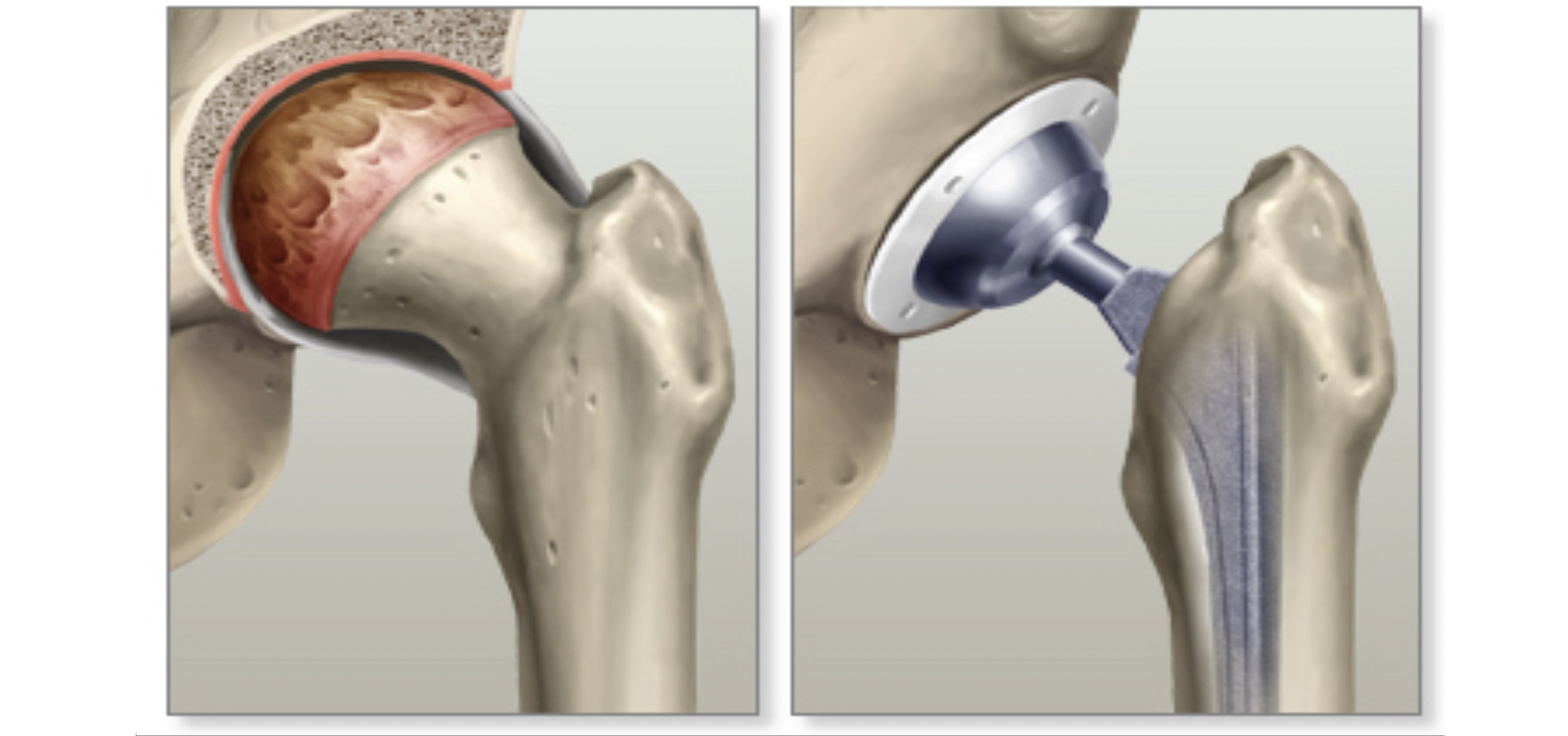
Hip replacement is one of the most successful orthopedic surgeries, designed to replace the damaged joint with artificial components that mimic the natural hip’s movement.
🔍 Understanding the Hip Replacement Procedure
Here’s a simplified overview of what happens during a total hip replacement:
- Anesthesia: The patient is given regional or general anesthesia so the surgery is pain-free.
- Incision and removal: The surgeon makes a precise incision over the hip, removes the damaged bone and cartilage and prepares the remaining healthy bone.
- Implant placement: A prosthetic stem with a metal or ceramic ball is inserted into the femur, and a matching cup is fixed into the pelvic socket with a plastic liner to allow smooth motion.
- Closing the incision: After testing stability, the surgeon closes the incision and moves the patient to recovery.
Most hip replacements take about 1–2 hours to complete.
🧑⚕️ Risks and Precautions
Like all major surgeries, hip replacement carries risks:
- Infection: Especially in patients with health conditions like diabetes or immune issues, infection risk is higher and needs careful management.
- Dislocation: If movements like crossing the legs or bending too far are performed too soon after surgery, the new joint can dislocate.
- Implant wear or mechanical issues: Over time, artificial hips can wear or loosen, sometimes requiring revision surgery.
Following your surgeon’s post-operative guidelines — such as avoiding certain positions and gradually increasing activity — significantly reduces these risks.
🏃♂️ Recovery: What to Expect
Recovery from hip replacement after an accident can take time, but most patients see big improvements in pain and function.
Early Phase (Days to Weeks):
- Physical therapy starts within a day or two to encourage gentle movement and prevent stiffness.
- Walking with a walker or cane helps build strength and confidence.
Intermediate Phase (6-12 Weeks):
- Most patients regain much of their mobility.
- Physical therapists focus on strength, balance, and gait training.
Long-Term (3-12 Months):
- Continued improvement continues for up to a year.
- Most people return to low-impact activities like walking, swimming, or cycling.
Some patients wonder when they can resume specific activities — for example, driving could be safe around 4–6 weeks post-surgery, depending on pain and mobility and whether the replaced hip is on the right or left side.
💬 Real-Life Experiences
Patients recovering from hip replacements after traumatic fractures often share that:
- Recovery timelines vary — some people still feel aches several months after surgery.
- Rehabilitation is essential — consistent physical therapy makes a big difference.
- Emotions matter too — recovery includes mental and emotional adaptation to a new level of mobility.
Forums and support groups are full of stories like one person who still felt hip pain many months after surgery but improved steadily with therapy and patience, highlighting the importance of individualized recovery expectations.
🧠 Final Thoughts
A hip replacement after an auto accident is a major medical decision — but it can profoundly improve pain, mobility, and quality of life for those whose hip joints were severely damaged. Whether you’re just starting to explore surgical options or already scheduled for surgery, knowing what to expect helps you prepare mentally and physically.